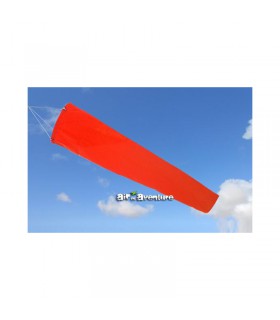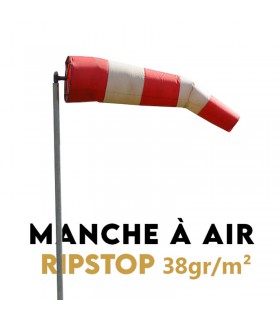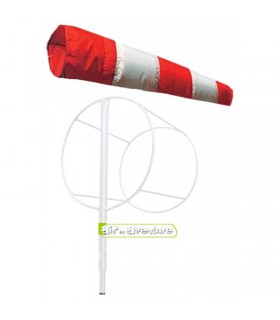


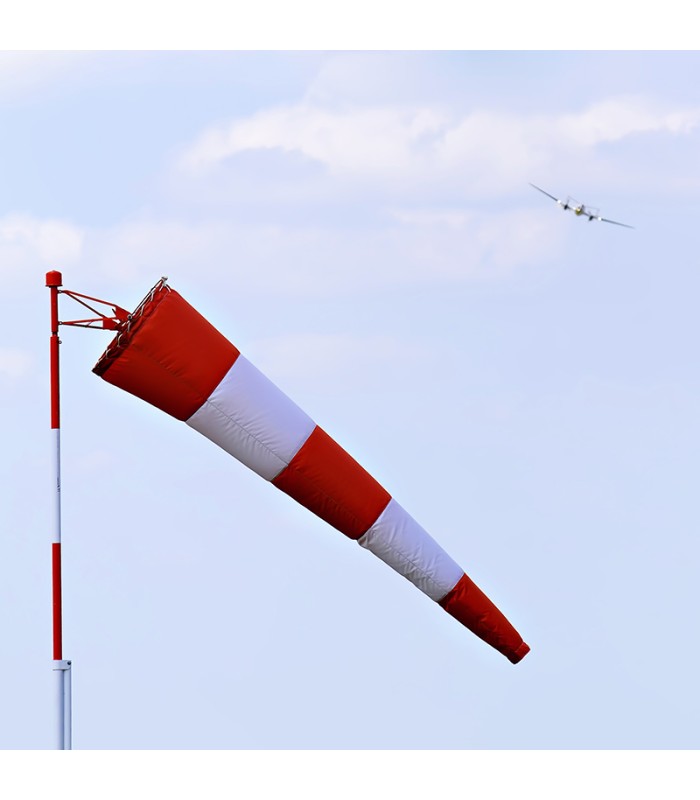



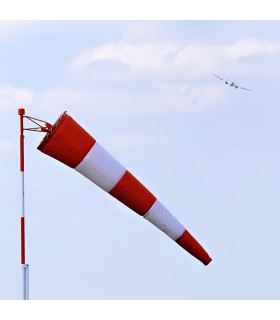
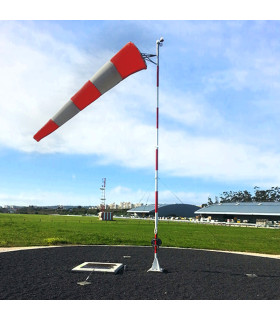

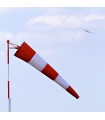

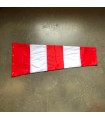

STNA-approved windsocks allow you to assess and measure wind speed. Made from high-quality fabric, they are moisture, weather and UV resistant.
Size: Ø 0.3m x 1m / Ø 0.3m x 1m20 / Ø 0.3m x 1m80 / Ø 0.4m x 2.50m / Ø 0.5m 2.25m / Ø 0.6m x 2.40 / Ø 1m x 4.50m
Resistance: Very high
Environment: Wet or dry, with low to extreme wind values
Use: Heliports/official aerodromes, SEVESO sites, construction sites, freeways, paragliding, kitesurfing etc. Windsock made entirely in France .
Sizing guide

The STNA (Service Technique de la Navigation Aérienne) approved winds ock complies with ICAO (International Civil Aviation Organization) regulations.
Made entirely in France, the fabric used for its manufacture is of the highest quality. The fabric is made from 150g/m² polyester. This material gives our STNA windsocks a high level of resistance to UV, humidity and the elements. This quality is essential, as these devices are intended for permanent outdoor use.
What's more, thanks to their eyelet fastening system, they're also very easy to attach to the tops of their masts.
Cone-shaped and elongated, the STNA-approved windsock is a device used to assess wind direction. In fact, the tip always indicates wind direction.
The five alternating rings (3 red and 2 white) also measure wind speed. Indeed, when the windsock inflates, it is estimated that each coloured band corresponds to approximately 5 knots (about 9km/h). Consequently, when the sleeve is completely horizontal, the wind is blowing at more than 25 knots (45 km/h). Conversely, if the sleeve is parallel to the mast, the speed is less than 5 knots and the wind force is said to be "nil".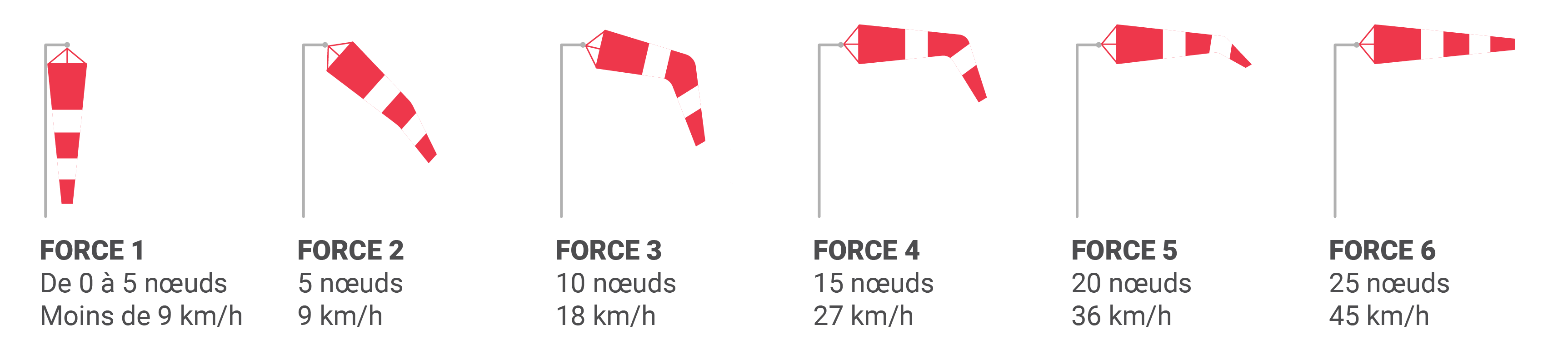 Nevertheless, a windsock can only provide an estimate of wind speed. So, if you need greater precision, you'll need to opt for an anemometer.
Our STNA winds ocks come in a range of sizes to suit your use and location:
| Dimensions | Recommended use |
|---|---|
|
|
|
|
|
|
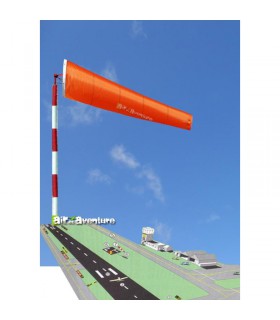
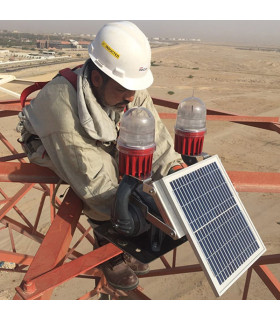
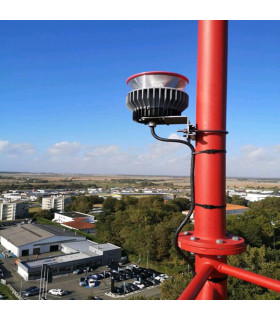
Airports, aerodromes and heliports are required to install STNA-compliant windsocks. They must be located in unobstructed areas so that they can be easily seen by helicopters or airplanes in flight. Coupled with LED lighting, they are visible day and night.
These windsocks are indispensable, especially for pilots during take-off and landing.
Recommended in some places, windsocks are also subject to certain obligations and regulations in others.
For example, windsocks are known as J7 beacons under the Highway Code and road safety regulations. Often accompanied by a sign warning of the risk of strong crosswinds, they are placed at the edge of freeways and viaducts to indicate the strength and direction of the wind to road users. This information enables road users to adapt their driving to avoid wind-related deviations.
Airfields and airports are also places where windsocks can be found. These comply with the STNA (Service Technique de la Navigation Aérienne) standards set by the International Civil Aviation Organization (ICAO). They are indispensable here, as they provide pilots with invaluable information during landing and take-off phases.
European SEVESO plants are also required to install wind direction indicators (Instruction of 4/9/1970, circular of 24/7/72, Ministry of the Environment)

Data sheet
STNA-approved windsocks allow you to assess and measure wind speed. Made from high-quality fabric, they are moisture, weather and UV resistant.
Size: Ø 0.3m x 1m / Ø 0.3m x 1m20 / Ø 0.3m x 1m80 / Ø 0.4m x 2.50m / Ø 0.5m 2.25m / Ø 0.6m x 2.40 / Ø 1m x 4.50m
Resistance: Very high
Environment: Wet or dry, with low to extreme wind values
Use: Heliports/official aerodromes, SEVESO sites, construction sites, freeways, paragliding, kitesurfing etc. Windsock made entirely in France .
Sizing guide

 Garanties sécurité
(à modifier dans le module "Réassurance")
 Politique de livraison
(à modifier dans le module "Réassurance")
 Politique retours
(à modifier dans le module "Réassurance")